Former Greek prime minister George Papandreou says that when he asked German Chancellor Angela Merkel for gentler conditions in 2010, she replied that the aid program had to hurt. "We want to make sure nobody else will want this!" Ms. Merkel told him.
Also read the very detailed and lengthy report on how the austerity plan has failed on the Wall Street Journal.
Showing posts with label greek outlook. Show all posts
Showing posts with label greek outlook. Show all posts


May 11, 2012
Lessons from the Greek Crisis 3: We Shall Dance...the Day we Get a Chance
"We shall dance, we shall dance
The day we get a chance
To pay off all the violins of the ball
We shall dance, we shall dance
The day we get a chance
To get a dime to buy back our souls
We shall dance, we shall sing
My dear love, O my spring
My love good days will come"
Greek singer Demis Roussos from 1971 sings with his emotional, sweet voice "We Shall Dance" in a rare
recording.
Greek progressive rock band Aphrodite's Child (including later day music stars Vangelis on keyboards and Demis Roussos in vocals) perform "Rain and Tears" in 1969.
"Rain and tears are the same, but in the sun you've got to play the game"
Mar 28, 2012
Lessons from the Greek Crisis 2
Lilika Nakou/Nakos, novelist, writes in Land of Boeotia (1967): "Our people has greatly suffered. You can even see it in the vocabulary: When we refer to making love, we say 'to tear our eyes out'. When we refer to eating, we say 'to get ourselves poisoned'. And when we refer to sleeping, we say 'playing dead'... "
How many words can contain the despair that people, young and old, poor and less poor, are reduced to through no personal fault nowadays? How can language contain rage?
 |
| via http://www.flickriver.com/photos/hippohere/popular-interesting/ |
How many words can contain the despair that people, young and old, poor and less poor, are reduced to through no personal fault nowadays? How can language contain rage?
Mar 21, 2012
Lessons from the Greek Crisis 1
 |
| via playle.com |
Sounds superficial and Coelho-like in its simplistic, humanist message, but spring will always come in the end. The sun always rises from the east. There's hope where people bask under the sun.
Imagine if this were the UK.
Mar 5, 2012
Liberation: "Greece, the Cradle of a New World"
From an article in the French paper Liberation (appearing on this link in the original French). Translation from the French my own, links by me.
"No, although dramatic, what is happening in Greece is not a disaster. It can even be an opportunity. For the power of money has, for the first time, briskly exceeded the -until then- gradual, meticulous and carefully organized destruction of the public good and of human dignity. And that has happened in a land as famous for its philosophy of life -diametrically opposed to the Anglo-Saxon model- as for its relentless resistance to multiple oppressions that have tried to bring it to heel. The Greek does not dance and will never dance to goose-stepping, nor will he bend his spine down, regardless of the regimes imposed on him. He dances with his arms raised up, as if to fly towards the stars. He writes on the walls that which he wishes to read elsewhere. He burns a bank when that bank leaves him unable to afford even his traditional grill. The Greek is as much alive as the ideology that threatens him is leathal. And the Greek, even beaten to pulp, always rises in the end.
Yes, European finances wanted to make an example out of the Greek. But in their surliness to hit the country which seemed the weakest link in the euro-zone, in their excessive violence, their mask fell off. It is now more than ever, the time to point to all their true face: that of totalitarianism. For it is indeed that. And there is only one answer to totalitarianism: the fight, tough and uncompromising, until the point of armed combat, if necessary, since its very existence is at stake. We have a world, a life of values to defend. Everywhere in the streets, they are our brothers, our sisters, our children, our parents who are hit before our eyes, even distant. We are hungry, cold, in pain alongside them. All the hits they have received are also likely hurting us too. Each Greek child who faints in their schoolyard calls us to indignation and revolt. For the Greeks, it is time to say no, and, for all of us to support them.
Because Greece is now leading the fight against financial totalitarianism, which is destroying the public property, threatening daily survival, spreading despair, fear and the cretinisation of a war of all against all, everywhere in the world.
Beyond an emotionally-driven anger, which lets off steam by destroying symbols of oppression, a lucid anger rises, that of resistance fighters who refuse to be dispossessed of their own lives for the benefit of the bank mafia and their logic of "mad money". With the direct democracy assemblies, the civil disobedience movement "I don't not pay (any more)" and the first experiences of self-regulation, a new Greece is emerging, which rejects the tyranny market on behalf of humans.
We do not know how long it will take for people to overcome their voluntary servitude, but it is certain that, faced with the ridicule of political cronyism in these corrupt democracies and the grotesque cynicism of the state-bankster, we will have a choice - against any profiteering - to manage our affairs ourselves.
Greece is our past. It is also our future. Let's reinvent it! In 2012, let's all be Greeks!"
 |
| via toonpool.com |
"No, although dramatic, what is happening in Greece is not a disaster. It can even be an opportunity. For the power of money has, for the first time, briskly exceeded the -until then- gradual, meticulous and carefully organized destruction of the public good and of human dignity. And that has happened in a land as famous for its philosophy of life -diametrically opposed to the Anglo-Saxon model- as for its relentless resistance to multiple oppressions that have tried to bring it to heel. The Greek does not dance and will never dance to goose-stepping, nor will he bend his spine down, regardless of the regimes imposed on him. He dances with his arms raised up, as if to fly towards the stars. He writes on the walls that which he wishes to read elsewhere. He burns a bank when that bank leaves him unable to afford even his traditional grill. The Greek is as much alive as the ideology that threatens him is leathal. And the Greek, even beaten to pulp, always rises in the end.
Yes, European finances wanted to make an example out of the Greek. But in their surliness to hit the country which seemed the weakest link in the euro-zone, in their excessive violence, their mask fell off. It is now more than ever, the time to point to all their true face: that of totalitarianism. For it is indeed that. And there is only one answer to totalitarianism: the fight, tough and uncompromising, until the point of armed combat, if necessary, since its very existence is at stake. We have a world, a life of values to defend. Everywhere in the streets, they are our brothers, our sisters, our children, our parents who are hit before our eyes, even distant. We are hungry, cold, in pain alongside them. All the hits they have received are also likely hurting us too. Each Greek child who faints in their schoolyard calls us to indignation and revolt. For the Greeks, it is time to say no, and, for all of us to support them.
Because Greece is now leading the fight against financial totalitarianism, which is destroying the public property, threatening daily survival, spreading despair, fear and the cretinisation of a war of all against all, everywhere in the world.
Beyond an emotionally-driven anger, which lets off steam by destroying symbols of oppression, a lucid anger rises, that of resistance fighters who refuse to be dispossessed of their own lives for the benefit of the bank mafia and their logic of "mad money". With the direct democracy assemblies, the civil disobedience movement "I don't not pay (any more)" and the first experiences of self-regulation, a new Greece is emerging, which rejects the tyranny market on behalf of humans.
We do not know how long it will take for people to overcome their voluntary servitude, but it is certain that, faced with the ridicule of political cronyism in these corrupt democracies and the grotesque cynicism of the state-bankster, we will have a choice - against any profiteering - to manage our affairs ourselves.
Greece is our past. It is also our future. Let's reinvent it! In 2012, let's all be Greeks!"
Feb 25, 2012
Iceland Compared with Greece against the Crisis: Why & How Greece was Led to Give Away Sovereign Rights
This just might be the most important post I will write on the Greek Outlook for some time, so pay attention.
"You can say with certainty that Iceland has the world record in remission households out of the crisis. The country has done everything needed in a crisis, following the book. Any economist would agree" said Lars Christensen, chief emerging markets economist at Danske Bank in Copenhagen.
The measures taken by Iceland to revive the crisis of 2008, when the banks went into bankruptcy for the amount of 85 billion dollars, were supremely effective resulting in freeing the burden of debt once and for all.
Of course, to do all these Iceland played very intelligently its geostrategic "ace": When it bankrupt and rioting began in the peaceful country, when none of its Western allies give any assistance (Iceland being in NATO) the country began "courting" with Russia for a month.
Once the Prime Minister of Russia V.Poutin announced a program of economic assistance worth tens of billions of dollars to rescue the Icelandic economy "within 24 hours Britain and Norway said they will directly aid Iceland " as they eventually did.
To transport the issue from Iceland to the Crisis in Greece and to compare how differently the crisis was purposefully handled here:
I am reminding you that Greece had flirted with Russia indeed, closing the deal of the Burgas-Alexandroupolis natural gas pipe line, during the administration of Kostas Karamanlis. The then prime minister was soon cut short of his 4-year-spanning elected administration by the sudden eruption of the Vatopedi scandal in spring 2008 (and which has been contested successfully as fabricated, as you can see for yourself in multiple-sides testimonies). The Vatopedi scandal was communicated in the Greek media as causing a tremendously large damage to state funds, an image that was then transplated as such to the international media, but the official investigators appointed by the Greek state have not discovered any real Greek state monetary loss in the transactions.
The administration of George Papandreou was forwarded, winning the elections in autumn 2009. I use "forwarded" purposefully: An article in the New York based Greek newspaper “Ethnikos Kirikas” (National Messenger) was claiming back then that the #3 in power at the US Whitehouse was in Athens in the summer prior to the 2009 federal elections to make sure that Papandreou won the election from the then prime minister of the ND party Kostas Karamanlis! Why were the US interested in securing Papandreou on the seat of prime-minister?
Karamanlis had already vetoed FYROM's entrance in NATO alliance on grounds of national name dispute and false ethnic minorities claim arising from it. He had also rejected the UN's proposal on the Cyrpus issue (a proposal that would arguably bear a heavy toll on the divided island for the price of closure in the almost 40-year long division; a Carthaginian peace, if you will). Karamanlis was not the most well liked man in Washington, let's just say. Even democratic elections can be swayed by the power of the media and the media, local and international, were opposing Karamanlis right & left during that eventful period, probably directed by some higher power in cahoots with political and financial nuclei. (Greeks were furious at the spending of state money by corrupt politicians. The subsequent trials and proceedings have since resulting in absolving then ministers of punible blame, even though I'm absolutely certain there has been corruption that hasn't been tackled yet; but in other areas than those brought out to the light, which I find -shall we say- telling...).
This autumn-2009-emerging G.A.Papandreou administration was already in communications with the International Monetary Fund for a bailout and financial aid, according to Dominique Strauss-Khan himself (then head of IMF), even before they had got hold of the economical figures, before the elections!! Strauss-Khan is quoted by a French reporter on French TV as saying that: “when I say that the IMF came to Greece and we wrapped things up in 15 days I am obviously exaggerating. We wrapped things up in 15 days because we worked for months before that with Greek authorities" (watch the admission video in its entirety here, putting the frame of the talks in autumn 2009). Coincidence?
Essentially Papandreou therefore flat out LIED to the Greek people telling them repeatedly "there IS money!" pre-electorally to win the popular vote in autumn 2009, while simultansously speeding up processes that led up to the open intervention of the IMF in Greece months after it was secretly agreed upon. Why? Several VERY intriguing questions pop up!
The whole business has always presented in the same tone: "we are going to help 'save" Greece'. To which Greeks mutter between themselves: "please, don't save us any more!" Finally the international press is seeing how there is truth in that, comparing the Greek bailout to the Afghan War: "In Greece as in Afghanistan, there are profound negative consequences associated with both action and inaction. It's not clear that a good solution exists, but everyone feels compelled to muddle on anyway. There's a suspicion that, at best, all our planning will only delay the inevitable to a more convenient time: don't let Afghanistan collapse until the Taliban are a bit weaker, don't let Greece collapse until the rest of Europe is in recovery and able to absorb it." Interestingly Afganistan and Greece are two territories where opposition is difficult to curb; the first due to terrain and intricasy of local leaders nuclei, the second due to a long tradition of resistance & disobediance amongst the people.
The Burgas-Alexandroupoli project was eventually dropped, for reasons that appear unrelated to political machinations at first sight, at the end of 2011 (The official reason is declared as Bulgarian opposition of environmentalists).Though a project that was in talks since the mid-1990s, and several deals & details were signed collaterally by all countries involved during the mid-2000s (when Karamanlis was prime-minister), the construction of the actual pipe-line was scheduled to begin in October 2009. Coincidence?
G.A. Papandreous was always very opposed to it, despite it being a project that would generate thousands of jobs in Northern Greece and would boost the economy tremendously. Why then? What did he discuss with Putin when abandoning the project in a visit to Moscow in 2010? The data linked talk about offers of financial aid by Putin at interests as low as 2-3%, investments throughout the country and benefits arising from the use of Neorion shipbuilding yard on Syros island. All these were rejected by Papandreou! Obviously no association with Russia whatsoever was intended, sought or evaluated positively by the Papandreous administration, despite being the leader of the Greek Socialist party (PASOK) nonetheless.
Proposals by China and the Arab world regarding huge investements in Greece that would have resulted in a tangible boost in the economy have ALSO mysteriously been rejected by the G.A.Papandreous administration without further justification. Coincidence?
The words "high treason" are on many Greeks' lips regarding the people involved.
Let's see the revealing timeline for a clarification of my point:
September 2007: Winning the elections for the second time, means another term of Kostas Karamanlis as Greek prime minister (scheduled span of administration: till early autumn 2011, i.e. 4 years, as per Greek constitution).
Spring 2008: The Vatopedi scandal erupts. Agressive local media coverage on claims of state being at a loss & implication of ministers.This is tranmitted as such through the international media as well.
October 2009: Karamanlis announces elections just one year and a month after being elected, is defeated by PASOK leader George A. Papandreou and resigns from the leadership of his party after 12 years.
November 2009: Papandreou definitely in talks with Dominique Strauss-Khan over intervention of IMF in Greece (according to Strauss-Khan'sown admission on video as detailed above)
February 2010: The Greek people is told that intervention from the IMF must be sought at all costs: "we're sinking", the prime minister says. Assurances that the package will ensure getting out of the crisis by 2011 are given.
Spring 2010: The IMF and the Troika arrive in Athens. An unprecented in the Western world in its severity austerity measures package is proposed and immediately implemented by the government. This isn't the last one: two more follow, the latest in February 2012, dropping the quality of living by a steep 50% for most people, leaving 1:3 of Greek living below the limit of poverty.
October 2010: Visit of Papandreou to Moscow when every proposition of aid/investing is rejected. Abadonment of the gas pipeline project.
June 2011: Strauss-Khan, head of IMF, is abruptly charged with a rape charge in New York city; he's prosecuted and sent to trial. The reactions are spanning the whole spectrum. (The case is eventually dropped because of lack of evidence, as per his lawyer Ben Brafman: "What happened in that room, so long as we have now confirmed that it wasn't criminal, is really not something that needs to be discussed publicly." Is it a coincidence it happened in New York? To a poor hotel worker of coloured skin too? The Wikileaks creator is also charged with rape in Sweden? Coincidence? Is -a foregone conclusion- the feminist protestation regarding issues of such sensitive nature (and of coloured rights against discrimination) an assured means to press -and press hard!- on certain public figures?
Straus-Khan is let off all too late: He has already lost the leadership of the IMF and has been absent from the crucial late-July 2011 Greek bailout decisions, plus he has damaged every chance of filing for French presidency in the elections against Sarkzy. Strauss-Khan incidentally is a philleline.)
July 2011: Large protests in Athens, the Greek capital, oppose the augmented demands of the IMF and the EuroGroup resulting in significant "hair-cutting" part of the debt, thus meaning Greece won't be able to get out in the free market to borrow money any time soon. The measures are passed through a flood of Greek "indignandos" at Syntagma square in front of the Parliament, protesting peacefully from all walks of life, the size of which Greece hasn't seen since probably the re-establishment of democracy in 1974.
Officials insist the measures are necessary if painful and by 2014 Greece will be out in the markets again, if they're implemented.
November 2011: In an unprecedented confusion about what will happen about the continuation or not of the course already taken, Papandreou throws everyone off with a suggestion of a Referendum of the Greek people as to whether they will vote "Yes" to austerity measures & thus stay within the Eurozone or "No" and therefore exit the Eurozone (and effectively the European Union as well, a situation dreaded by at least 75% of Greeks) He retracts the proposition in a matter of 24 hours, claiming he proposed it fearing of a military coup in Greece. This weirdly coincides with the long-scheduled change of military heads in all Greek arms. Coincidence? Papandreou manages to be therefore hurriedly invited at the Cannes G20 meeting, where further actions are decided for the "saving" of Greece by the powerful of the world and he has personal meetings with Sarkozy and Merkel.
December 2011: A new coalition government is enstated, not out of elective processes, but thanks to Papandreou finally stepping down from prime-minister (absorbing the public anger) in favour of Europe-&-US-approved & assigned Lukas Papademos. Papademos is the banker of the National Bank who was cognizant (and some say complicit!) to the machinations of former prime-minister Kostas Simitis who ~assisted by Goldman Sachs~ "cooked" the national economic figures at the time in order to meet EU standards and enter the Eurozone in 2001. What do Papademos, Mario Draghi (of the European Central Bank) and Mario Monti (assigned Italy PM) have in common? A connection to Goldman Sachs, as reported by London correspondent Marc Roche in French paper Le Monde. Coincidence?
Is Greece serving as the Trojan Horse for Goldman Sachs to destroy the European countries' solidarity? (as reported by Russian Pravda). That would be poetic justice. Or just the canary in the coal mine?
February 2012: A 3rd severe austerity measures package is sanctioned by the EuroGroup, in attendance of the infamous PSI (the acceptance of losses by private creditors holding Greek debt) and implemented in Greece amidst angered protests with the threat of imminent bankruptcy and exit of the Eurozone: This is the second Memorandum and its text effectually forsakes sovereign rights to just about any income-producing sector of the country (state companies, land, oil reserves, rights to potential exploration of natural resources etc) for the forseeable future ~a special bank account to creditors is opened that will be paid first before the state meets ANY other of its own needs (i.e. pensions, salaries, state work, medical needs through social security etc). The Eurogroup Memorandum in February 2012 is estimating Greece's sovereign debt by 2020 to be equal to the amount of debt the country had in 2009!!! A more permanent position of European officials supervising measures implementation is effectuated and FOUR more such job positions are announced! [Rejoice European Brussells clerk, you too can take your holidays ad inifinitum in sunny, beautiful Greece and get paid for it!!]
Bottom-line: Greece is officially becoming a protectorate of the European powers and the USA through a scheme that is just now becoming quite evident.
Kostas Karamanlis is totally silent for every matter of the political life in Greece and Europe ever since and rumour has it that he has been threatened by external political forces (as of yet unknown) for his and his family's lives. Coincidence? This rumour is as yet unsubstantiated but sounds logical enough; a vast amount of Greeks consider it a very plausible train of events and an explanation to the whole situation: ousting the undesirable for the puppet.
Interesting factoid for further thought: The opposition leader Antonis Samaras, leader of the New Democracy party and successor to Kostas Karamanlis, although severely opposing the memorandum, in the end voted for it in February 2012. Samaras and G.A Papandreou not only are both Harvard School alumni and friends at the time of their student days, they were also roommates at Amherst College. They also played in the same band, as attested by the photo above. Coincidence?
The conclusions, your own...
 |
| Greek prime minister G.A.Papandreous hanging from a noose as a clown during protests in front of Parliament, 2011 |
"You can say with certainty that Iceland has the world record in remission households out of the crisis. The country has done everything needed in a crisis, following the book. Any economist would agree" said Lars Christensen, chief emerging markets economist at Danske Bank in Copenhagen.
The measures taken by Iceland to revive the crisis of 2008, when the banks went into bankruptcy for the amount of 85 billion dollars, were supremely effective resulting in freeing the burden of debt once and for all.
Of course, to do all these Iceland played very intelligently its geostrategic "ace": When it bankrupt and rioting began in the peaceful country, when none of its Western allies give any assistance (Iceland being in NATO) the country began "courting" with Russia for a month.
Once the Prime Minister of Russia V.Poutin announced a program of economic assistance worth tens of billions of dollars to rescue the Icelandic economy "within 24 hours Britain and Norway said they will directly aid Iceland " as they eventually did.
To transport the issue from Iceland to the Crisis in Greece and to compare how differently the crisis was purposefully handled here:
I am reminding you that Greece had flirted with Russia indeed, closing the deal of the Burgas-Alexandroupolis natural gas pipe line, during the administration of Kostas Karamanlis. The then prime minister was soon cut short of his 4-year-spanning elected administration by the sudden eruption of the Vatopedi scandal in spring 2008 (and which has been contested successfully as fabricated, as you can see for yourself in multiple-sides testimonies). The Vatopedi scandal was communicated in the Greek media as causing a tremendously large damage to state funds, an image that was then transplated as such to the international media, but the official investigators appointed by the Greek state have not discovered any real Greek state monetary loss in the transactions.
The administration of George Papandreou was forwarded, winning the elections in autumn 2009. I use "forwarded" purposefully: An article in the New York based Greek newspaper “Ethnikos Kirikas” (National Messenger) was claiming back then that the #3 in power at the US Whitehouse was in Athens in the summer prior to the 2009 federal elections to make sure that Papandreou won the election from the then prime minister of the ND party Kostas Karamanlis! Why were the US interested in securing Papandreou on the seat of prime-minister?
Karamanlis had already vetoed FYROM's entrance in NATO alliance on grounds of national name dispute and false ethnic minorities claim arising from it. He had also rejected the UN's proposal on the Cyrpus issue (a proposal that would arguably bear a heavy toll on the divided island for the price of closure in the almost 40-year long division; a Carthaginian peace, if you will). Karamanlis was not the most well liked man in Washington, let's just say. Even democratic elections can be swayed by the power of the media and the media, local and international, were opposing Karamanlis right & left during that eventful period, probably directed by some higher power in cahoots with political and financial nuclei. (Greeks were furious at the spending of state money by corrupt politicians. The subsequent trials and proceedings have since resulting in absolving then ministers of punible blame, even though I'm absolutely certain there has been corruption that hasn't been tackled yet; but in other areas than those brought out to the light, which I find -shall we say- telling...).
This autumn-2009-emerging G.A.Papandreou administration was already in communications with the International Monetary Fund for a bailout and financial aid, according to Dominique Strauss-Khan himself (then head of IMF), even before they had got hold of the economical figures, before the elections!! Strauss-Khan is quoted by a French reporter on French TV as saying that: “when I say that the IMF came to Greece and we wrapped things up in 15 days I am obviously exaggerating. We wrapped things up in 15 days because we worked for months before that with Greek authorities" (watch the admission video in its entirety here, putting the frame of the talks in autumn 2009). Coincidence?
Essentially Papandreou therefore flat out LIED to the Greek people telling them repeatedly "there IS money!" pre-electorally to win the popular vote in autumn 2009, while simultansously speeding up processes that led up to the open intervention of the IMF in Greece months after it was secretly agreed upon. Why? Several VERY intriguing questions pop up!
The whole business has always presented in the same tone: "we are going to help 'save" Greece'. To which Greeks mutter between themselves: "please, don't save us any more!" Finally the international press is seeing how there is truth in that, comparing the Greek bailout to the Afghan War: "In Greece as in Afghanistan, there are profound negative consequences associated with both action and inaction. It's not clear that a good solution exists, but everyone feels compelled to muddle on anyway. There's a suspicion that, at best, all our planning will only delay the inevitable to a more convenient time: don't let Afghanistan collapse until the Taliban are a bit weaker, don't let Greece collapse until the rest of Europe is in recovery and able to absorb it." Interestingly Afganistan and Greece are two territories where opposition is difficult to curb; the first due to terrain and intricasy of local leaders nuclei, the second due to a long tradition of resistance & disobediance amongst the people.
The Burgas-Alexandroupoli project was eventually dropped, for reasons that appear unrelated to political machinations at first sight, at the end of 2011 (The official reason is declared as Bulgarian opposition of environmentalists).Though a project that was in talks since the mid-1990s, and several deals & details were signed collaterally by all countries involved during the mid-2000s (when Karamanlis was prime-minister), the construction of the actual pipe-line was scheduled to begin in October 2009. Coincidence?
G.A. Papandreous was always very opposed to it, despite it being a project that would generate thousands of jobs in Northern Greece and would boost the economy tremendously. Why then? What did he discuss with Putin when abandoning the project in a visit to Moscow in 2010? The data linked talk about offers of financial aid by Putin at interests as low as 2-3%, investments throughout the country and benefits arising from the use of Neorion shipbuilding yard on Syros island. All these were rejected by Papandreou! Obviously no association with Russia whatsoever was intended, sought or evaluated positively by the Papandreous administration, despite being the leader of the Greek Socialist party (PASOK) nonetheless.
Proposals by China and the Arab world regarding huge investements in Greece that would have resulted in a tangible boost in the economy have ALSO mysteriously been rejected by the G.A.Papandreous administration without further justification. Coincidence?
The words "high treason" are on many Greeks' lips regarding the people involved.
 |
| G.A Papandreou (bottom left) and A.Samaras (upper right), mates in the same band. |
Let's see the revealing timeline for a clarification of my point:
September 2007: Winning the elections for the second time, means another term of Kostas Karamanlis as Greek prime minister (scheduled span of administration: till early autumn 2011, i.e. 4 years, as per Greek constitution).
Spring 2008: The Vatopedi scandal erupts. Agressive local media coverage on claims of state being at a loss & implication of ministers.This is tranmitted as such through the international media as well.
October 2009: Karamanlis announces elections just one year and a month after being elected, is defeated by PASOK leader George A. Papandreou and resigns from the leadership of his party after 12 years.
November 2009: Papandreou definitely in talks with Dominique Strauss-Khan over intervention of IMF in Greece (according to Strauss-Khan'sown admission on video as detailed above)
February 2010: The Greek people is told that intervention from the IMF must be sought at all costs: "we're sinking", the prime minister says. Assurances that the package will ensure getting out of the crisis by 2011 are given.
Spring 2010: The IMF and the Troika arrive in Athens. An unprecented in the Western world in its severity austerity measures package is proposed and immediately implemented by the government. This isn't the last one: two more follow, the latest in February 2012, dropping the quality of living by a steep 50% for most people, leaving 1:3 of Greek living below the limit of poverty.
October 2010: Visit of Papandreou to Moscow when every proposition of aid/investing is rejected. Abadonment of the gas pipeline project.
June 2011: Strauss-Khan, head of IMF, is abruptly charged with a rape charge in New York city; he's prosecuted and sent to trial. The reactions are spanning the whole spectrum. (The case is eventually dropped because of lack of evidence, as per his lawyer Ben Brafman: "What happened in that room, so long as we have now confirmed that it wasn't criminal, is really not something that needs to be discussed publicly." Is it a coincidence it happened in New York? To a poor hotel worker of coloured skin too? The Wikileaks creator is also charged with rape in Sweden? Coincidence? Is -a foregone conclusion- the feminist protestation regarding issues of such sensitive nature (and of coloured rights against discrimination) an assured means to press -and press hard!- on certain public figures?
Straus-Khan is let off all too late: He has already lost the leadership of the IMF and has been absent from the crucial late-July 2011 Greek bailout decisions, plus he has damaged every chance of filing for French presidency in the elections against Sarkzy. Strauss-Khan incidentally is a philleline.)
July 2011: Large protests in Athens, the Greek capital, oppose the augmented demands of the IMF and the EuroGroup resulting in significant "hair-cutting" part of the debt, thus meaning Greece won't be able to get out in the free market to borrow money any time soon. The measures are passed through a flood of Greek "indignandos" at Syntagma square in front of the Parliament, protesting peacefully from all walks of life, the size of which Greece hasn't seen since probably the re-establishment of democracy in 1974.
Officials insist the measures are necessary if painful and by 2014 Greece will be out in the markets again, if they're implemented.
November 2011: In an unprecedented confusion about what will happen about the continuation or not of the course already taken, Papandreou throws everyone off with a suggestion of a Referendum of the Greek people as to whether they will vote "Yes" to austerity measures & thus stay within the Eurozone or "No" and therefore exit the Eurozone (and effectively the European Union as well, a situation dreaded by at least 75% of Greeks) He retracts the proposition in a matter of 24 hours, claiming he proposed it fearing of a military coup in Greece. This weirdly coincides with the long-scheduled change of military heads in all Greek arms. Coincidence? Papandreou manages to be therefore hurriedly invited at the Cannes G20 meeting, where further actions are decided for the "saving" of Greece by the powerful of the world and he has personal meetings with Sarkozy and Merkel.
December 2011: A new coalition government is enstated, not out of elective processes, but thanks to Papandreou finally stepping down from prime-minister (absorbing the public anger) in favour of Europe-&-US-approved & assigned Lukas Papademos. Papademos is the banker of the National Bank who was cognizant (and some say complicit!) to the machinations of former prime-minister Kostas Simitis who ~assisted by Goldman Sachs~ "cooked" the national economic figures at the time in order to meet EU standards and enter the Eurozone in 2001. What do Papademos, Mario Draghi (of the European Central Bank) and Mario Monti (assigned Italy PM) have in common? A connection to Goldman Sachs, as reported by London correspondent Marc Roche in French paper Le Monde. Coincidence?
Is Greece serving as the Trojan Horse for Goldman Sachs to destroy the European countries' solidarity? (as reported by Russian Pravda). That would be poetic justice. Or just the canary in the coal mine?
February 2012: A 3rd severe austerity measures package is sanctioned by the EuroGroup, in attendance of the infamous PSI (the acceptance of losses by private creditors holding Greek debt) and implemented in Greece amidst angered protests with the threat of imminent bankruptcy and exit of the Eurozone: This is the second Memorandum and its text effectually forsakes sovereign rights to just about any income-producing sector of the country (state companies, land, oil reserves, rights to potential exploration of natural resources etc) for the forseeable future ~a special bank account to creditors is opened that will be paid first before the state meets ANY other of its own needs (i.e. pensions, salaries, state work, medical needs through social security etc). The Eurogroup Memorandum in February 2012 is estimating Greece's sovereign debt by 2020 to be equal to the amount of debt the country had in 2009!!! A more permanent position of European officials supervising measures implementation is effectuated and FOUR more such job positions are announced! [Rejoice European Brussells clerk, you too can take your holidays ad inifinitum in sunny, beautiful Greece and get paid for it!!]
Bottom-line: Greece is officially becoming a protectorate of the European powers and the USA through a scheme that is just now becoming quite evident.
Kostas Karamanlis is totally silent for every matter of the political life in Greece and Europe ever since and rumour has it that he has been threatened by external political forces (as of yet unknown) for his and his family's lives. Coincidence? This rumour is as yet unsubstantiated but sounds logical enough; a vast amount of Greeks consider it a very plausible train of events and an explanation to the whole situation: ousting the undesirable for the puppet.
Interesting factoid for further thought: The opposition leader Antonis Samaras, leader of the New Democracy party and successor to Kostas Karamanlis, although severely opposing the memorandum, in the end voted for it in February 2012. Samaras and G.A Papandreou not only are both Harvard School alumni and friends at the time of their student days, they were also roommates at Amherst College. They also played in the same band, as attested by the photo above. Coincidence?
The conclusions, your own...
Feb 11, 2012
Rebranding Greece: What Greece Needs to Do
Peter Economides (responsible in part for probably the best EOT campaign ever) gives a marketing talk to end all marketing talks about rebranding Greece in this current smearing international campaign that has altered our core characteristics into the image projected to the world.
To quote him: "Greece is on the verge of bankrupcy. But we are not a bankrupt nation. We are Greeks. People with the power to imagine. People with the intelligence to turn imagination into reality. We imagined democracy. We imagined the Acropolis. Now is time to imagine the future."
I couldn't have summarised it better.
To quote him: "Greece is on the verge of bankrupcy. But we are not a bankrupt nation. We are Greeks. People with the power to imagine. People with the intelligence to turn imagination into reality. We imagined democracy. We imagined the Acropolis. Now is time to imagine the future."
I couldn't have summarised it better.
Feb 7, 2012
The Chain-Saw Moussaka (Das Kettensägen-Moussaka)
Why Greece serves as an experiment into how far economic oppression from international money consortia and bankers will go.....

From Profil.at, Austrian online magazine, translated from the German (bold is mine).
"In the case of Greece every tax increase is a great idea, and any benefit is considered kürzenswert. [...]
When unemployment has reached a record high of 19.2 percent, when state hospitals lock operating rooms because they cannot get new staff, when the suicide rate rises sharply, when the Ministry of Education distributes food vouchers to student needs, because of the increasing numbers of children and adolescents suffering malnutrition, and when at the same time, the 90th national economic competitiveness in the international ranking of the seven places on the Rank has crashed: then everything is really okay so far! [...]
In the spirit of European solidarity, the starvation of the Greek population is quite reasonable, because the European taxpayer should be convinced to support a nation that has gone bankrupt, because they have lived beyond their means. Even the cold snap last week in Athens is welcomed as a case of a higher justice.
[...] The austerity rather combines the worst of all worlds - we call it sado-economics.
Oddly, nowhere outside of Greece is opposition stirring opposition, no matter what draconian measures are enacted. Conservative governments like the black and yellow in Berlin suddenly have no problem with solidarity levies, increases in income tax or a new property tax. Social Democrats and Chancellor of Austria Werner Faymann do not cry when the VAT rate increased verve and the budgets of Social Affairs and Health will be reformed with a chainsaw.
If it follows Greece, everything is permitted, especially as the European leaders need to present the austerity program themselves. It is not even clear whether they approve it in detail. A faceless triumvirate of delegates of the International Monetary Fund (IMF), the European Commission and European Central Bank (ECB) uses a flying visit to Athens in order to explain what needs to be done. The Greeks therefore necessarily demonstrate with banners that say "Troika out"; but such a slogan is pretty abstract, and ultimately goes nowhere.
They are supported now, at least from the German economic expert Peter Bofinger. "With the cuts, the economy has stalled, which caused the deficits to rise, after which the troika demanded even harsher austerity measures," criticizes the economist.
Currently groaning are many EU member countries - including Austria - given the self-imposed"debt brake" laws. The saving and loading packages that are being discussed for this purpose would cause cheering in Greece, so harmless are they in comparison. Gustav Horn by the German Institute for Macroeconomic Research with respect to the ARD, commented on the highly controversial reform plans "Agenda 2010" of the former SPD-Green government of Chancellor Gerhard Schroeder as a "Mickey Mouse program compared to what happened in Greece".
In Austria, a Greek austerity scale would mean the end of the republic, as we know it. [...]
The list of charges is long, and yet forever the same sentence at the end of each listing is as follows: "Greece has missed its savings targets'. [...]
Because now the Hellenic Republic unsurprisingly barely has any highly profitable companies in its portfolio, the fact would be that privatization revenues remain at modest levels. [...] The former economics minister Stefanos Manos judged as soon as the publication of the plan was lacking for the ARD, "This is ridiculous. You want to sell the railroad company. But who in their right mind will buy it? It would be completely crazy to do that! "
A certain madness accompanies the whole process supposed to rescue Greece from the beginning. The three previous austerity bestowed the country with a recession that was worse every year - 2009, the economy shrank by 3.2 percent the following year there were already 3.5 percent and 5.5 percent last year. Corollary: The debt continues to rise.
The troika still has not reached the end of their wisdom. Now let's drop the minimum wage in the private sector, which is in Greece at 750 €. This is expected to be a more dynamic labor market. However, the business associations themselves speak out against such a measure, because they know that in private consumption it would continue to decline.
Poul Thomsen, head of the delegation of the IMF, demanded by Athens last week to accelerate structural reforms. He admitted that so far too much emphasis had been placed on new taxes. The next economy package should therefore lower the better wages. Both are of course long since done. Munter is rotated on all screws.
Greece is a field trial for schizophrenia become economists, expenditure and revenue side where all ideas can be tested simultaneously. [...] And if Greece collapses at the end, there's an alternative: Perhaps the same experiment will work out in Portugal." [see this]

From Profil.at, Austrian online magazine, translated from the German (bold is mine).
"In the case of Greece every tax increase is a great idea, and any benefit is considered kürzenswert. [...]
When unemployment has reached a record high of 19.2 percent, when state hospitals lock operating rooms because they cannot get new staff, when the suicide rate rises sharply, when the Ministry of Education distributes food vouchers to student needs, because of the increasing numbers of children and adolescents suffering malnutrition, and when at the same time, the 90th national economic competitiveness in the international ranking of the seven places on the Rank has crashed: then everything is really okay so far! [...]
In the spirit of European solidarity, the starvation of the Greek population is quite reasonable, because the European taxpayer should be convinced to support a nation that has gone bankrupt, because they have lived beyond their means. Even the cold snap last week in Athens is welcomed as a case of a higher justice.
[...] The austerity rather combines the worst of all worlds - we call it sado-economics.
Oddly, nowhere outside of Greece is opposition stirring opposition, no matter what draconian measures are enacted. Conservative governments like the black and yellow in Berlin suddenly have no problem with solidarity levies, increases in income tax or a new property tax. Social Democrats and Chancellor of Austria Werner Faymann do not cry when the VAT rate increased verve and the budgets of Social Affairs and Health will be reformed with a chainsaw.
If it follows Greece, everything is permitted, especially as the European leaders need to present the austerity program themselves. It is not even clear whether they approve it in detail. A faceless triumvirate of delegates of the International Monetary Fund (IMF), the European Commission and European Central Bank (ECB) uses a flying visit to Athens in order to explain what needs to be done. The Greeks therefore necessarily demonstrate with banners that say "Troika out"; but such a slogan is pretty abstract, and ultimately goes nowhere.
They are supported now, at least from the German economic expert Peter Bofinger. "With the cuts, the economy has stalled, which caused the deficits to rise, after which the troika demanded even harsher austerity measures," criticizes the economist.
Currently groaning are many EU member countries - including Austria - given the self-imposed"debt brake" laws. The saving and loading packages that are being discussed for this purpose would cause cheering in Greece, so harmless are they in comparison. Gustav Horn by the German Institute for Macroeconomic Research with respect to the ARD, commented on the highly controversial reform plans "Agenda 2010" of the former SPD-Green government of Chancellor Gerhard Schroeder as a "Mickey Mouse program compared to what happened in Greece".
In Austria, a Greek austerity scale would mean the end of the republic, as we know it. [...]
The list of charges is long, and yet forever the same sentence at the end of each listing is as follows: "Greece has missed its savings targets'. [...]
Because now the Hellenic Republic unsurprisingly barely has any highly profitable companies in its portfolio, the fact would be that privatization revenues remain at modest levels. [...] The former economics minister Stefanos Manos judged as soon as the publication of the plan was lacking for the ARD, "This is ridiculous. You want to sell the railroad company. But who in their right mind will buy it? It would be completely crazy to do that! "
A certain madness accompanies the whole process supposed to rescue Greece from the beginning. The three previous austerity bestowed the country with a recession that was worse every year - 2009, the economy shrank by 3.2 percent the following year there were already 3.5 percent and 5.5 percent last year. Corollary: The debt continues to rise.
The troika still has not reached the end of their wisdom. Now let's drop the minimum wage in the private sector, which is in Greece at 750 €. This is expected to be a more dynamic labor market. However, the business associations themselves speak out against such a measure, because they know that in private consumption it would continue to decline.
Poul Thomsen, head of the delegation of the IMF, demanded by Athens last week to accelerate structural reforms. He admitted that so far too much emphasis had been placed on new taxes. The next economy package should therefore lower the better wages. Both are of course long since done. Munter is rotated on all screws.
Greece is a field trial for schizophrenia become economists, expenditure and revenue side where all ideas can be tested simultaneously. [...] And if Greece collapses at the end, there's an alternative: Perhaps the same experiment will work out in Portugal." [see this]
Oct 27, 2011
Greek Crisis T-shirt

Someone responds with a vengeance: "Your culture". (Click on the photo to see it written with pen on the right hand bottom corner)
Sep 26, 2011
Greece: Against the Stereotypes
Presented to you by the British Hellenic Chamber of Commerce people: Busting the myths surrounding Greek crisis, Greek debt, Greek way of life...
Jul 6, 2011
Craziness Street

The signpost reads: "Craziness Street: You can walk this street fearlessly. We own it." Indeed we do.
As seen on Apollonia, Sifnos island, Greece. Summer 2011.
Picture author's own, copyrighted by Elena Vosnaki
Jun 29, 2011
Two Statues: "It was for them we fought"

George Seferis, the Nobel prize poet (and Greece's ambassador to London in the 1960s) wrote of a beloved leader of the revolution, General Makriyannis; Makriyannis had no formal education and in his old age taught himself to read. In his battling days he had been able to preserve two ancient statues until the liberation. At that time he found that some soldiers were thinking of selling them.
Seferis quotes Makriyannis: "I took these soldiers aside and told them this: You must not give away these things, not even for ten thousand talers; you must not let them leave the country; it was for them we fought".
And Seferis wrote: "You see it is not a great scholar, nor an archaeologist speaking. It is a shepherd's son from Roumelia, his body covered with wounds: 'It was for them we fought'.
~from the memorandum submitted by Jules Dassin to the British Parliament (on occasion of a plea to return the Elgin marbles)
On this fateful day, may we remember "it was for them we fought" and not be swayed by false dilemmas and hyenas: where one head gets cut off, two spring up again. You must burn the cancerous in order to get rid of it once and for all.
Further reading:
Makriyannis: The Memoirs of General Makriyannis 1797-1864 (ed. & trans. H.A. Lidderdale), Oxford: OUP, 1966 (in English).
May 22, 2011
The (Greek) World is Based on Chaos and Cheap Smokes
"Every morning will see me give myself 10 secs to realise where I am and why. There goes another 5 secs to accept my total incapability for any work. The realisation of my tragic financial situation is visceral, a fact that helps me gain time and devote it to my fish. There are times when I long to tell them everything about my life...But even if they weren't deaf, their memory retention ability doesn't last longer than 3 secs, as long as it takes them to swim around the bowl. Maybe that's why I can see my whole life reflected in their eyes, a continuous swirl, a happy nil. These are the first moments of the day, when inspiration comes to rescue me.~Renos Haralambidis, Cheap Smokes(2000)
The world is based on Chaos and I'm going to cross it without searching for logical order...This is my life, capiche?"
It's not hard to see how the pseudophilosophizing nihilistic types who construct poetic mock-noir films such as Cheap Smokes on a zero budget are in reality nothing of the sort. But this diarrhea of the spirit which takes place in front of an existential mirror is reflecting the plight of the modern Greek to a T: The world is based on chaos and I'm going to cross it without searching for logical order. I wonder though whether this isn't some trait encrypted into the Greek DNA. The classical adherence to Law as the ultimate order of any society of free men addresses probably people who were deeply chaotic to begin with. Otherwise why the marked insistence?
Elsewhere the anti-hero inwardly wonders in a voice-over: "I should be subsidised by the Ministry of Culture. Why should they pay someone to make a statue and not me to wander around town like a moving statue? Damn country! It doesn't appreciate artists!"
Another trait of the modern (and perhaps eternal) Greek: "Why them and not ME?" (Sarcastic) self-loathing is taking a very sideways patriotic course: The country would only be rescued if I were given half a chance!
In a place where you have to be "poniros" (i.e. cunning without being evil) to make things go by, there isn't too much shortage of chaos in the first place. This eternal self-loathing is best spent at a "cafeneion", a coffee shop, "a place with a huge industry of lost time. It is the art of allowing time to pass by without leaving its mark". Which probably explains why the modern Greek revolutionary spirit is mollified into (intricate) words rather than swift action: Contrast with the Heroic Outlook.
Mar 28, 2011
Rembetika, the Greek Blues
The 1983 film "Rembetiko" by Costas Ferris recounts the life of old "rembetes" (musicians and songwriters of the urban outcast sub-cultures, originally in the Greek-Anatolian coast and then refugees in port-towns of Greece where they fled in 1922); especially of Marika Ninou, but also based on other artists' lives. They wrote rembetika songs, what are affectionately termed "Greek Blues" due to their mood. But watching the film we not only get a glimpse of the culture of the rembetes, but also a glimpse through Greek history from 1917 to 1957; from the aftermath of WWI, the Asia Minor Catastrophe, WWII and the Nazi occupation, the Civil War, the political upheaval and the return to a legally represented government.
The harrowing, foreboding music is written by Stavros Xarhakos, the lyrics by Nikos Gatsos. Sung by Sotiria Leonardou.
The first song (Kaigomai Kaigomai i.e. I'm burning, I'm burning) follows the Anatolian mode of "amané" (from the poignant cry "aman" throughout), a heavy, deeply sorrowful tune, here reminiscing of the plight of the refugees who had to flee Asia Minor and especially Smyrna/Izmir in 1922.
When man is born,
a sorrow is born.
And when the war erupts,
the blood cannot be count.
I'm burning, I'm burning,
throw more oil in the fire.
I'm drowning, I'm drowning,
throw me into a bottomless sea.
I swore upon your eyes, which I considered Gospel,
the slash you gave me to turn into a smile.
But you, deep in Hell, break the chain,
and if you drag me there beside you, blessed may you be.
The second song (The Net) is as Greek as it gets: concept, melody, style, lyrics and mood. A life lesson, distilled times seven...
Every time you open a road in life,
don't wait till midnight catches up with you.
Keep your eyes wide open, day and night,
because right in front of you, there's always a net spread.
If ever you get caught in its mesh,
no one will be able to get you out.
Alone you'll have to find the end of the thread
and, if you're lucky, to start over.
This net bears heavy names,
written in a seven-times-sealed scroll.
Some call it underworld's treachery,
and others yet call it first springtime's love...
Translation author's own.
The harrowing, foreboding music is written by Stavros Xarhakos, the lyrics by Nikos Gatsos. Sung by Sotiria Leonardou.
The first song (Kaigomai Kaigomai i.e. I'm burning, I'm burning) follows the Anatolian mode of "amané" (from the poignant cry "aman" throughout), a heavy, deeply sorrowful tune, here reminiscing of the plight of the refugees who had to flee Asia Minor and especially Smyrna/Izmir in 1922.
When man is born,
a sorrow is born.
And when the war erupts,
the blood cannot be count.
I'm burning, I'm burning,
throw more oil in the fire.
I'm drowning, I'm drowning,
throw me into a bottomless sea.
I swore upon your eyes, which I considered Gospel,
the slash you gave me to turn into a smile.
But you, deep in Hell, break the chain,
and if you drag me there beside you, blessed may you be.
The second song (The Net) is as Greek as it gets: concept, melody, style, lyrics and mood. A life lesson, distilled times seven...
Every time you open a road in life,
don't wait till midnight catches up with you.
Keep your eyes wide open, day and night,
because right in front of you, there's always a net spread.
If ever you get caught in its mesh,
no one will be able to get you out.
Alone you'll have to find the end of the thread
and, if you're lucky, to start over.
This net bears heavy names,
written in a seven-times-sealed scroll.
Some call it underworld's treachery,
and others yet call it first springtime's love...
Translation author's own.
Mar 25, 2011
If only '21 would come back...

1821 that is...
"One by one the glorious years come back to me,
if only '21 would come back for a moment.
To cross the wide plain, my horse astride,
and alongside Kolokotronis to drink wine.
To fight on the castles during the day,
my sword sprinkling sparks.
And to hold a beauty under the stars
during the night".
What made the Greek National Revolution of 1821 the seal of valour that it truly is to this day is, in my opinion, that it was bitterly opposed by every single one of the European countries and administrations when it erupted as the just complaint of a people rising up again an opressor. The French Revolution and the surge of Napoleon throughout Europe, you see, had convinced the chancellors of Europe that the status quo should not be distrurbed ever again.
The revolutioners fought against every adversary as if they were protecting what was eternally theirs: their right to rule their own lives, the soil of their fathers and their classical culture as the identity by which they wish to be identified. The chancellors of Europe only changed their stance when they saw that, after years of successful fighting, the outcome would not be in their favour if they did not implicate themselves into the procedure.
Faces and incidents change, but history remains the same.
Painting by Theodore Vryzakis (1865), The Oath at Aghia Lavra
Lyrics by Sotia Tsotou from the song "If only '21 would come back" by Stavros Kougioumtzis, sung by Grigoris Bithikotsis.
Mar 14, 2011
Democracy is self-desctructing
"Our Democrazy is self-destructing because it abused the right of freedom and equality, because it taught citizens to consider insolence their right, to consider law-breaking freedom, to view impertinence of speech as egality and anarchy as bliss."
No, it's not a quote from some modern politician or statesman. It's a quote by Isocrates, ancient Greek orator (436-388BC).
No, it's not a quote from some modern politician or statesman. It's a quote by Isocrates, ancient Greek orator (436-388BC).
Feb 16, 2011
The Hellenic Race
"...there is the bond of Hellenic race, by which we are of one blood and of one speech, the common temples of the gods and the common sacrifices, the manners of life which are the same for all"
Herodotus, Histories 8,144
Herodotus, Histories 8,144
Feb 11, 2011
Greek Goddesses: 1.Melina Merkouri

Personality personified. Everything she did, she did with passion, a distinctly Greek trait. Even when misguided, petty things slided off her like water slides off a swan's feathers. Her grace and natural elegance were juxtaposed to a certain je m'en fous attitude and her adherence to who she was.
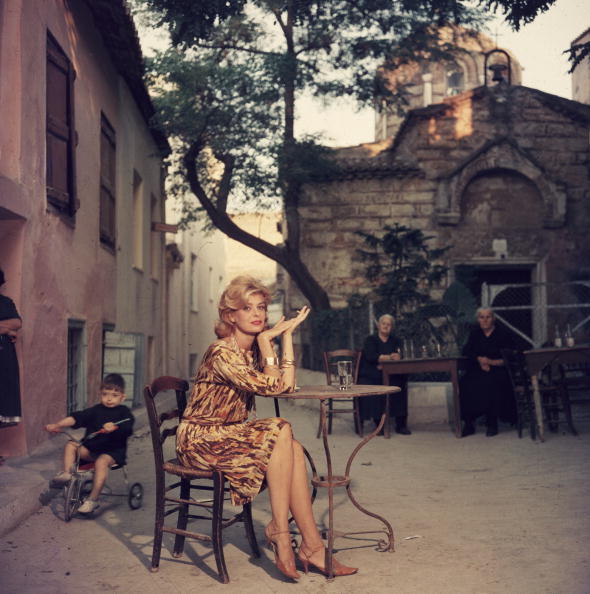
To the manor born and a prominent actress of international fame, when she was participating in the socialist governemnt of A.Papandreou during the 1980s she was advised to tone down her appearence when going to give a talk in poorer districts of Athens. Melina, defiant and true to herself, refused to get out of the YSL saying "this is who I am, I would be an imposter to don a chinz to go and pretend I'm something I'm not".

Loved and despised like few people have been, she never let anyone indifferent. Isn't that the very essence of being interesting?

The Greeks will be eternally grateful to her for championing the cause of the Elgin Marbles; the missing parts of the sculptures of the Parthenon up on the Acropolis, which were smuggled off the country during the Turkish occupation and the upheaval of the National Revolution by Lord Elgin and were deposited in the British Museum where they remain to this day.
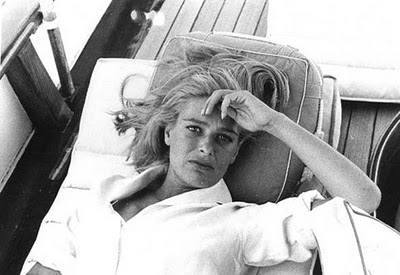
"I flirted down to the last minute of my life", she's quoted to say. The cigarette that was perennially hanging off her lips cut the thread of her life. It was well spent. Opa!


Feb 10, 2011
There is no Ship for You, There is no Road...
The City
You said, "I will go to another land, I will go to another sea.
Another city will be found, better than this.
Every effort of mine is condemned by fate;
and my heart is -- like a corpse -- buried.
How long in this wasteland will my mind remain.
Wherever I turn my eyes, wherever I may look
I see the black ruins of my life here,
where I spent so many years, and ruined and wasted."
New lands you will not find, you will not find other seas.
The city will follow you. You will roam the same
streets. And you will age in the same neighborhoods;
in these same houses you will grow gray.
Always you will arrive in this city. To another land -- do not hope --
there is no ship for you, there is no road.
As you have ruined your life here
in this little corner, you have destroyed it in the whole world.
Constantine P. Cavafy (1910)
translation from the Greek original by G.Barbanis
Clip recital by Dimitris Horn, a prominent Greek actor
Feb 8, 2011
To Death I say
Today is the 31st anniversary of the death of Nikos Xylouris. In his memory...
Mourning song by H.Halaris, sung by Nikos Xylouris and Hrysanthos Thoedoridis. From the album "Akoulouthia"
To Death I said, to Hades I say,
To Death I said, to Hades I say:
"Damn you Hades and a curse I put upon you!"
And I say to Hades' wife and to Hades' children:
"I have a green garment, never worn before,
I wear it and I laught at your face.
I hold the bread, seven-times leavened bread,
I eat it and I look you in the eye".
And I say to Hades' wife, and I say to Hades' children:
"Damn you, snakes, and no more shall I cry."
To Death I said, to Hades I say:
"Damn you Hades and a curse I put upon you!"
Mourning song by H.Halaris, sung by Nikos Xylouris and Hrysanthos Thoedoridis. From the album "Akoulouthia"
Subscribe to:
Posts (Atom)